August 28, 2020
by Matthew Rothschild, Executive Director
(Matt delivered these remarks to the AAUW-Wisconsin on August 27.)
Thanks for inviting me to speak at your Public Policy meeting again.
I’d be remiss if I didn’t mention, right at the top, the crisis we’re facing in this state, and in this country, when it comes to systemic racism.
We saw a horrific illustration of that systemic racism in the shooting of Jacob Blake in Kenosha on Sunday.
But it’s not an isolated incident. Prior to this, we’d had a dozen George Floyds right here in Wisconsin over the last decade, with Dontre Hamilton and Tony Robinson being only the most prominent.
This has got to stop, as does the excusifying for the police.
We need new, strict policies on the use of lethal force, and we need to root out racism now.
We also need to do something about all those semi-automatic weapons on our streets, as we saw to our horror in Kenosha on Tuesday night.
We need to take a stand.
And I’m sure grateful for the courage and the leadership of the Milwaukee Bucks and the NBA. They’re showing us all how to do it.
My friends, we’re living in a difficult time.
It’s a difficult time because we haven’t come to terms with racism in America, even after 400 years.
It’s a difficult time because we’re in the midst of barbaric capitalism, which is forcing people to work under lethal conditions.
And it’s a difficult time because, frankly, the Age of Enlightenment is over.
It’s dead.
We’re in a new Dark Ages, with superstition and tribalism in the ascendancy, joined dangerously now not just by quack conspiracies—I give you Q-Anon—but also by refried prejudices and resurgent nationalisms.
Plus, millions of Americans are suffering from nightly “truth decay,” as they are being fed lies and distortions on propaganda channels like Fox News.
And we’re all in our separate camps. In a sense, we’re living in totally different intellectual universes, which makes it difficult to have a conversation with people from the other universe who get vastly divergent explanations for what’s going on in this county and in the world.
In these new Dark Ages, the very idea of “truth” is under assault, as Michiko Kakutani, the longtime book editor at the New York Times, wrote in her book, “The Death of Truth.”
In such a circumstance, how do you differentiate between fake news and real facts? That’s one of the trick questions you asked me to answer tonight.
Well, I’ll give it a try.
- Read broadly. Find the most respectable sources you can find. But read around – and not just in your comfort zone.
- Go to the primary source, not the mediated one. If you didn’t see Pence’s speech last night, google it. Watch it for yourself. Don’t depend on the media stories about it.
- Be skeptical of everything you read and consume. Be even skeptical of your own ideas and beliefs. As the German philosopher Jurgen Habermas once said, reserve 10 percent of your brain for self-doubt.
- Scrutinize everything. If something seems too facile in your own belief system or arguments, fact check it yourself!
- Don’t just read the headlines, especially on Facebook! We’re all busy but we got to get past just reading the headlines and clicking “like” or “share” even without reading the article. I’ve done it myself. I’ve shared something on Facebook only to realize later that it’s a two-year-old story. That’s embarrassing. We can’t be lazy like that.
So these are some of the ways to distinguish real facts from “alternative facts,” as the departing Kellyanne Conway once so notoriously put it.
I’m sure you’re already an informed voter.
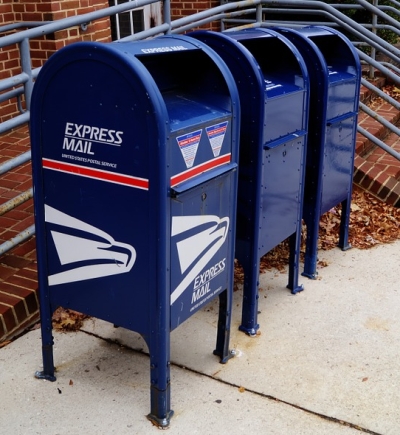 And as an informed voter, I hope you’re able to discern the truth about absentee or mail-in voting. Because the truth of the matter is, it’s tried and true. It’s safe and secure.
Members of our Armed Services have been doing mail-in voting for decades – with no problems.
Five states, including Utah, do entirely mail-in voting – with no problems.
And fraud is not a problem because states safeguard mail-in ballots by using signature verification, tracking barcodes, 24-hour surveillance of ballot drop-boxes, and setting clear chains of custody for all ballots.
Now, of course, given the slow-down at the Post Office, you should get your absentee ballot in early, or drop it off at your clerk’s office yourself if it’s getting close to Election Day.
I’m sure you don’t need my encouragement, but by all means vote. Your website itself noted how important this election is.
If you want to tell your friends where to go to get information about voting, they can go to myvote.wi.gov.
Or they can go the League of Women Voters of Wisconsin’s website at my.lwv.org/Wisconsin.
I know you’re going to be hearing from their executive director, Deb Cronmiller soon, but let me give them a plug. I love the League! They have on their website a section called “Voter Information,” which tells you not only how to register and how to vote, but also how to gather information on candidates so you can make an informed choice. They also publish an issue guide on candidates for office, so you can see where these candidates stand on many issues that might be important to you.
And you can always go to a candidate’s website and compare that candidate’s position with those of the candidate’s opponent.
You can also go to our website to see who’s funding them. Our website is www.wisdc.org , and then click on “Follow the Money,” and then “Look Up Candidates,” and then click on “Campaign 2020.” We also have info on some of the outside groups that are splattering our screens with mud so go to “Follow the Money” on our site and click on “Track Dark Money” and then click on “Hijacking Campaign, 2020.”
So that’s how you can educate yourself as a voter.
Figuring out how to educate other voters can be tougher, frankly, depending on who they are .
 If they’re open to rational conversation but just don’t know about the candidates, especially in down-ballot races, you can give them the info you have or steer them to the League of Women Voters or forward them articles you see in the local papers on those races.
And down-ballot races are vitally important, as we’ve learned here in Wisconsin over the last decade.
It really matters who is governor.
It really matters who has control of the Legislature, and whether there is a veto-proof majority or not.
It really matters who is on the State Supreme Court.
It really matters who is your mayor, and who is on your city council.
It really matters who is your county executive, and who is on the county board.
And yes, it really matters who your sheriff is. Just look at Kenosha!
In this Age of Covid, who your local officials are can be a matter of life and death.
So yes, encourage everyone you know to vote – and to vote down ballot.
But if people are dug in ideologically, it’s hard to know where to start.
Here’s an example.
I play poker, Texas Holdem, and some of the other players, let’s just say, don’t see the world the way I do.
After the shooting of Jacob Blake, one of them posted on Facebook the rap sheet on Jacob Blake, and sneered at those of us who were protesting. My approach, always, is to be polite and try to engage. So I said, “C’mon man! Just because he had a rap sheet doesn’t justify the cops shooting him seven times in the back or justify the mocking of those of us who oppose racism and police brutality. You’re better than that, my friend!”
I’m not sure it made a difference. He didn’t respond. But I do have a relationship with him. In fact, just a few weeks ago, he posted something about lamenting the Facebook friends he has lost because of his posts, and I responded that it wasn’t worth losing friends over posts. So we’ll see how that goes.
Here’s another example. A few houses down from where I live, the neighbors are flying two big “Trump 2020” flags. I don’t know these neighbors. I only have had one conversation with them while my wife and I were out walking, which was pleasant enough. It was mostly about birds because they’ve got, like, 10 bird feeders out, and I’m a big birder myself. So if I were on Team Biden, I might send them some information on Trump and his attempt to gut the Migratory Bird Treaty, but I’m not sure it’d make a dent.
Because I think we’re actually fooling ourselves when we believe that if we only give voters the right article, the perfect leaflet, the most coherent argument, or show them the cleverest meme, or point them to the most informative website, they’ll come around to our way of thinking.
 Unfortunately, it doesn’t work that way. There’ve been a lot of studies showing that people will repel the fact that disproves their beliefs rather than change their beliefs.
So I think educating voters is more of a long process of building relationships and engaging in conversations with people we know -- first over shared values and only then on the particular issue that concerns you.
That’s really our task, whether it’s about racism or the unequal economy or climate change or any other crucial issue that concerns us and confronts our democracy.
So my advice is to work on people closest to you, those you’re already in relationship with – family members, friends, people you socialize with.
And don’t preach to them. Talk to them where they’re at. Listen to and acknowledge their concerns. And try to nudge them along.
That’s all I do these days: Nudge, nudge, nudge.
And if we all nudge, nudge, nudge the people closest to us, we may be able to survive the New Dark Ages.
As W.H. Auden said, 81 years ago, “All I have is a voice to undo the folded lie.”
And he ended his “September 1939” poem this way:
“May we, beleaguered by the same negation and despair, show an affirming flame.”
And what do we affirm?
Let’s affirm the Enlightenment.
Let’s affirm facts.
Let’s affirm science.
But let’s also affirm values, such as solidarity, racial equity, democracy, freedom, equality, and justice.
And let’s also affirm love and kindness and friendship and working together for a full democracy, where everyone has an equal voice.
May these affirmations prevail!